
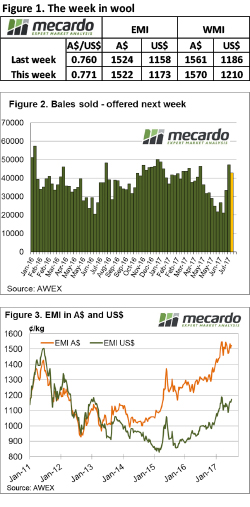
 It seems wool growers are selling as soon as the wool is shorn, with another large offering coming forward. Despite this, the market performed well despite receiving no help from a rising A$. AWEX report that W.A.’s unseasonaly dry weather has seen growers bringing forward shearing causing the increase in supply this week.
The increase in the Fremantle offering resulted in 46,400 bales offered, with 42,900 sold and 7.7% passed in.
The market was strong, although the finer than 17.5 MPG and the 21 MPG and broader were the leaders. In other categories, crossbred types experienced good price rises of 10 to 20 cents, however the Cardings indicator fell in all centres by 10 to 25 cents.
While the EMI lost 2 cents in the auction, the stronger levels of A$ quoted yesterday at US$0.77 meant that the EMI actually rallied US$0.15.
The sale result this week is a perfect result leading into the recess. Buyers were able to secure plenty of wool and buyers paid higher US$ prices. This sets the scene for exporters to visit customers over the recess and secure orders for the resumption of sales in a climate of optimism; always a much better position that when sales end on a downturn prior to a break.
A note about the crossbred rally this week; while all types experienced price increases it was the better prepared lots that were most keenly sought out. It pays to now spend some time on preparing crossbred wool in the woolshed, as this will either improve the price compared to poorly prepared lots or at the least increase competition.
The week ahead
The market now enters a three-week recess, with sales resuming on the week beginning 7th August in Fremantle, Melbourne & Sydney.
Based on this weeks competition the market should open well in three weeks time, especially if the A$ can lose a little ground.

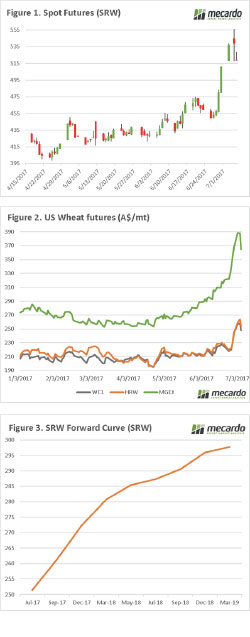 In the late 1600’s Sir Isaac Newton, developed the theory of gravity. It seems that in addition to determining that apples will fall from trees, it seems that what goes up in the grain market also comes down. After a sustained rally over recent weeks, some of the gains have been lost, however there are still good opportunities.
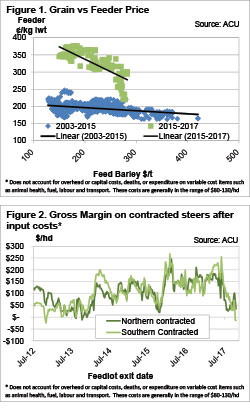 Grain prices have been on the rise. So what? A cattle producer might ask. How will it impact me? It depends what sort of cattle are being produced, but if it’s feeder cattle, rising grain prices are not good news.
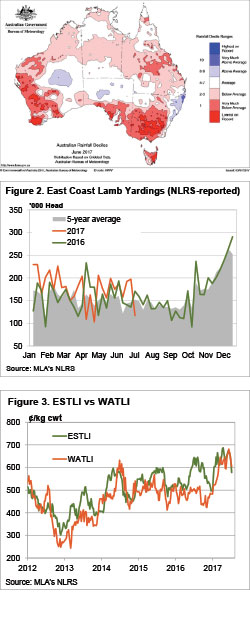 It doesn’t take a rocket analyst to work out why sheep and lamb prices have been sliding for the last month. The Eastern States Trade Lamb Indicator (ESTLI) this week broke through the 600¢ mark as the supply of stock direct to works appears to be reaching a peak.
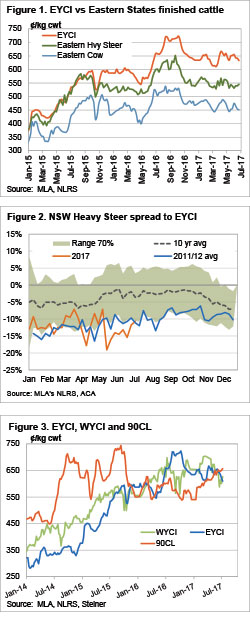 It was a better week for rainfall, with sporadic showers across the country, but it didn’t help the young cattle market. The Eastern Young Cattle Indicator (EYCI) continued its fall this week, but there was some support for slaughter cattle.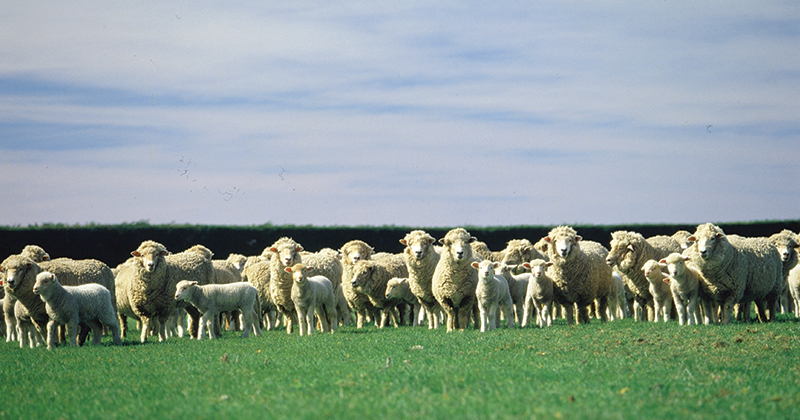
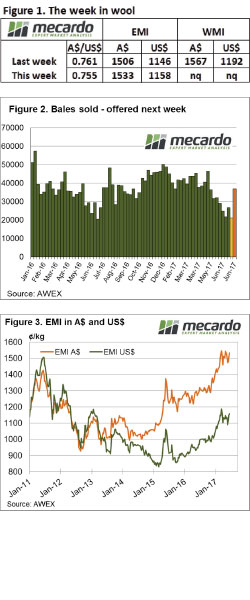 Again, the occasional, yet extreme demand for wool with good measurements (low mid breaks & good tensile strength) contributed to a mixed message out of this week’s wool market. The better types pushed the overall market to new levels while lower style wool battled to keep pace.
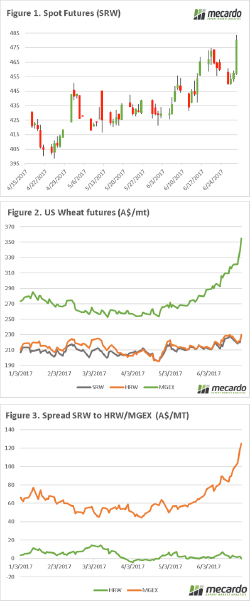 Well this is good news, wheat is on a journey to the moon, and at this rate beyond the planets. The downtrend of the past week has been reversed in dramatic fashion, is this a sign of things to come?
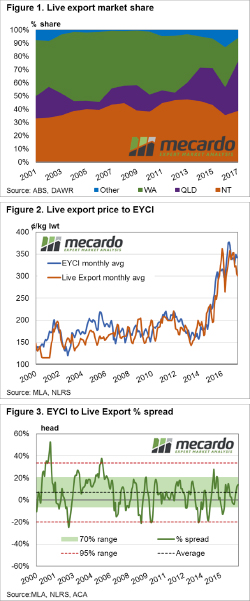 It has been some time since we had a look at live cattle exports so we thought it timely to focus in on the changing market share of the live cattle trade among the key export states, along with the price relationships that exist between live cattle and domestic young cattle.
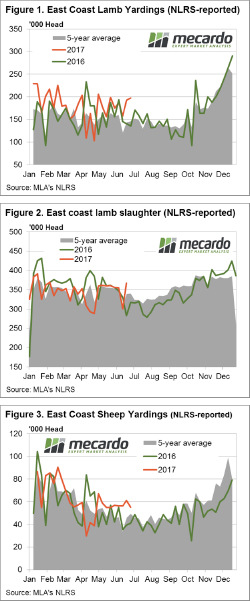 On the radio in today the weather report included a brief from BOM saying that June has been the driest in Victoria since records began and its taking its toll on the price of lamb and sheep. East coast figures show price falls in all categories other than Restocker lambs on the week and Light, Heavy and Trade lambs are now trading lower than this time last year.
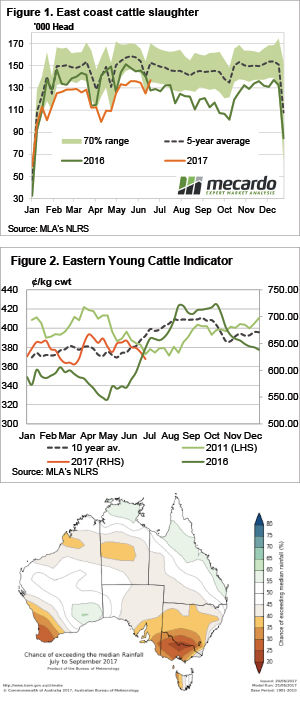 Here’s a quiz question. When was the last time the Eastern Young Cattle Indicator (EYCI) finished June lower than it started? You’ll have to read the article to find out….